

The “courting chair,” “conversation chair,” “gossip chair,” or more specifically the tête-à-tête, was a 19th century chair that originated in France. The term tête-à-tête’s literal translation is “head-to-head.” Within social contexts, however, the term refers to an informal conversation between two individuals, particularly friends or love interests. These chairs play into both definitions through their structural design and overall purpose. Tête-à-têtes were popular parlor pieces typically comprised of two opposite-facing seats joined together by a singular armrest for the sole purpose of allowing discreet intimate conversations. Such furnishings were not always meant for frivolous endeavors, however, and were often used to encourage professional and political discourse. Tête-à-têtes were a staple piece within 19th century middle-to-upper-class home parlors and hotels of Europe and the United States. In the event of courting specifically, a chaperone was necessary to ensure the virtue of both parties involved, to uphold the families’ reputations amongst society. Variations of the tête-à-tête, such as those that included the “indiscreet” or the “chaperone feature,” sported an added seat. This additional feature created a spiral-shaped furnishing where the chaperone had greater awareness of the conversations at hand. Therefore, conversations could be strictly monitored to prevent any sort of indiscretion.
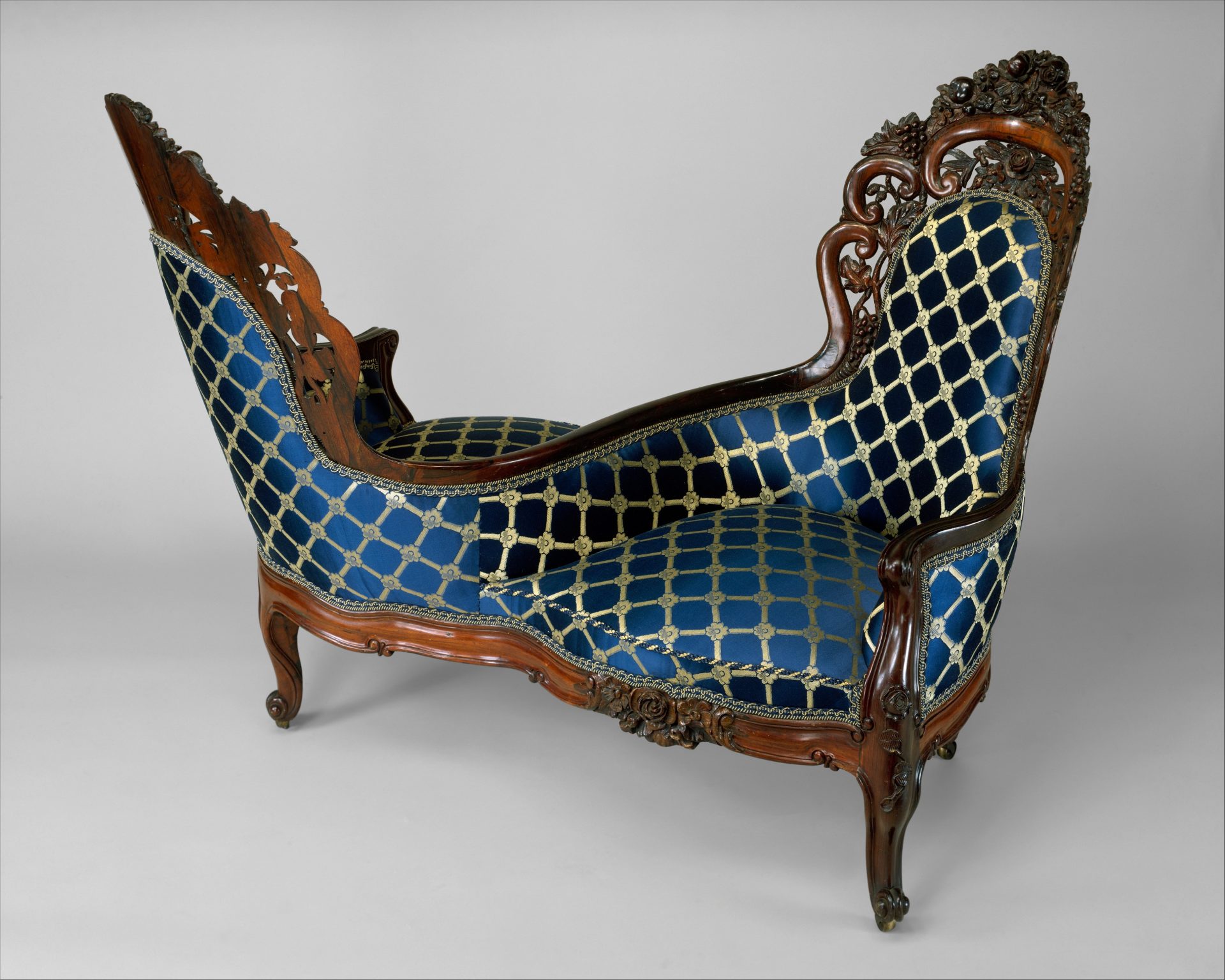
Image of tête-à-tête ca. 1850-1860 from the Metropolitan Museum of Art Collection New York, New York
Based on images from the collection here at SAHS and historical research on the construction of Flagler’s hotels, it is likely that Pottier and Stymus incorporated this variation of the tête-à-tête within the women’s parlor room at the Hotel Ponce De Leon when it opened in 1888. The next year, Flagler’s Hotel Alcazar also decorated by Pottier and Stymus furniture had a tête-à-tête placed in their parlor during construction as well.
Auguste Pottier and William Stymus originally met while working as foremen at the cabinet-making firm known as Rochefort and Skarren. Pottier was a trained sculptor and woodcarver out of Paris, while Stymus, from a family of German immigrants, had a background in upholstery. In 1859, Pottier and Stymus embarked on opening their own furniture and design company, utilizing their unique skills to produce hand-made furniture. Their initial workshop was located on 115 Wooster Street in Manhattan, with their salesroom at 623 Broadway. By 1871, the Pottier and Stymus factory occupied the full block between Lexington Avenue and 62nd Street.Their partnership, however, went beyond furniture making and included antique dealing as well as interior design for clients. Pottier and Stymus, amongst other New York based furniture makers, grew in popularity across the country and the world with the rise of Aestheticism in the domestic realm during the Victorian Era. Clients of Pottier and Stymus included luxury hotels such as the Ponce and Alcazar, various highbrow mansions, the White House Executive Mansion under President Ulysses Grant, and the Mexican Presidential residence of Chapultepec in Mexico City. The duo was most famously known for their Egyptian Revival styles which showcased motifs of lotuses, sphinxes, palmettos, and pharaohs. They also incorporated various other styles into their work, such as Neo-Greco, Renaissance Revival, Modern Gothic, and Japonesque.
Today, Pottier and Stymus are recognized by experts in the field as one of the most influential furniture designers of the Victorian Era. Their furniture is present in the collections of various museums across the globe, including in the archives of Flagler College (whose campus includes the Hotel Ponce de Leon) and the Lightner Museum (housed in the Hotel Alcazar’s building) here in St. Augustine. It is safe to say that the legacy of the Pottier and Stymus company lives on here in the Oldest City.
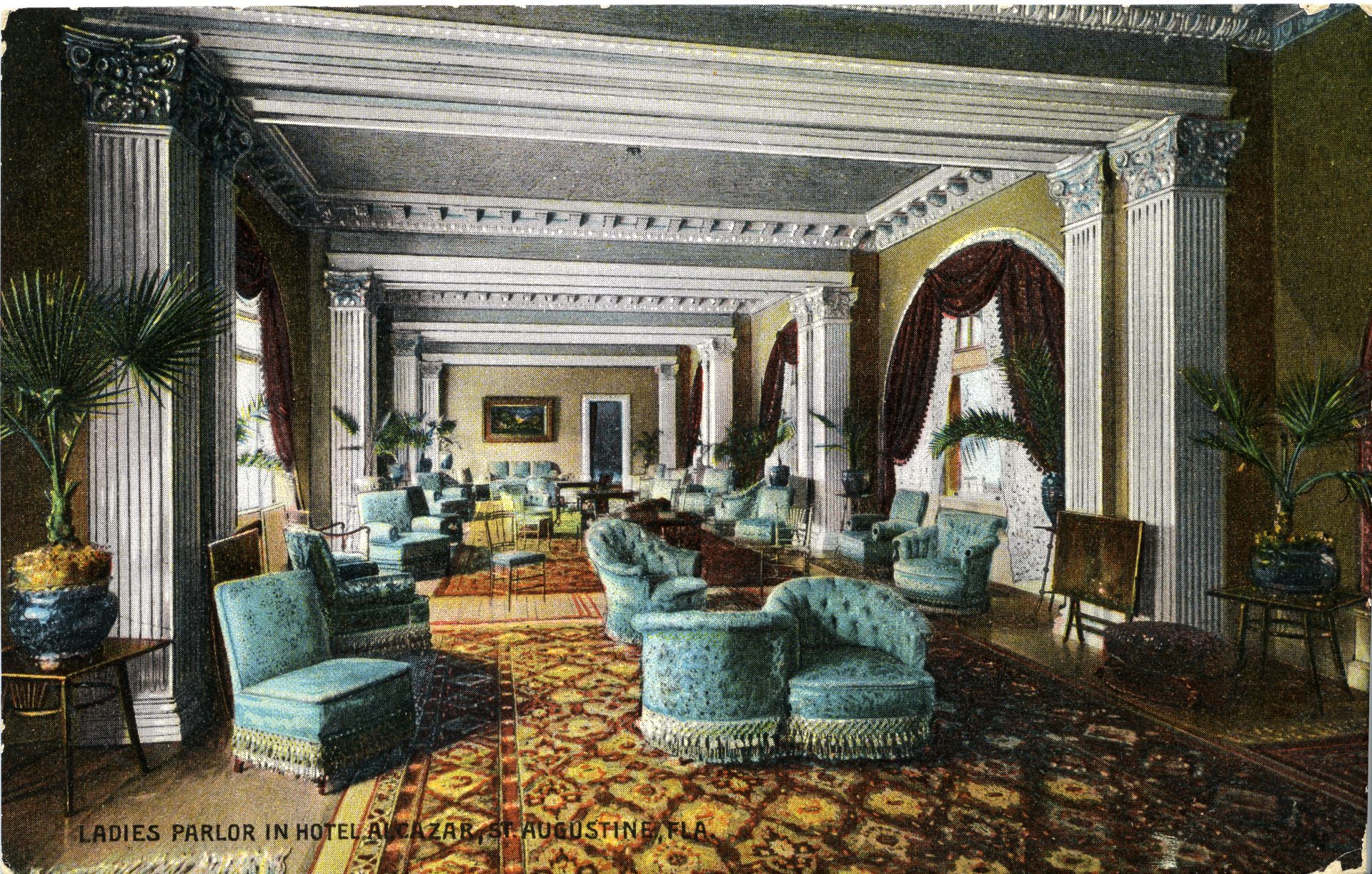
Image of tête-à-tête within parlor at the Alcazar Hotel.
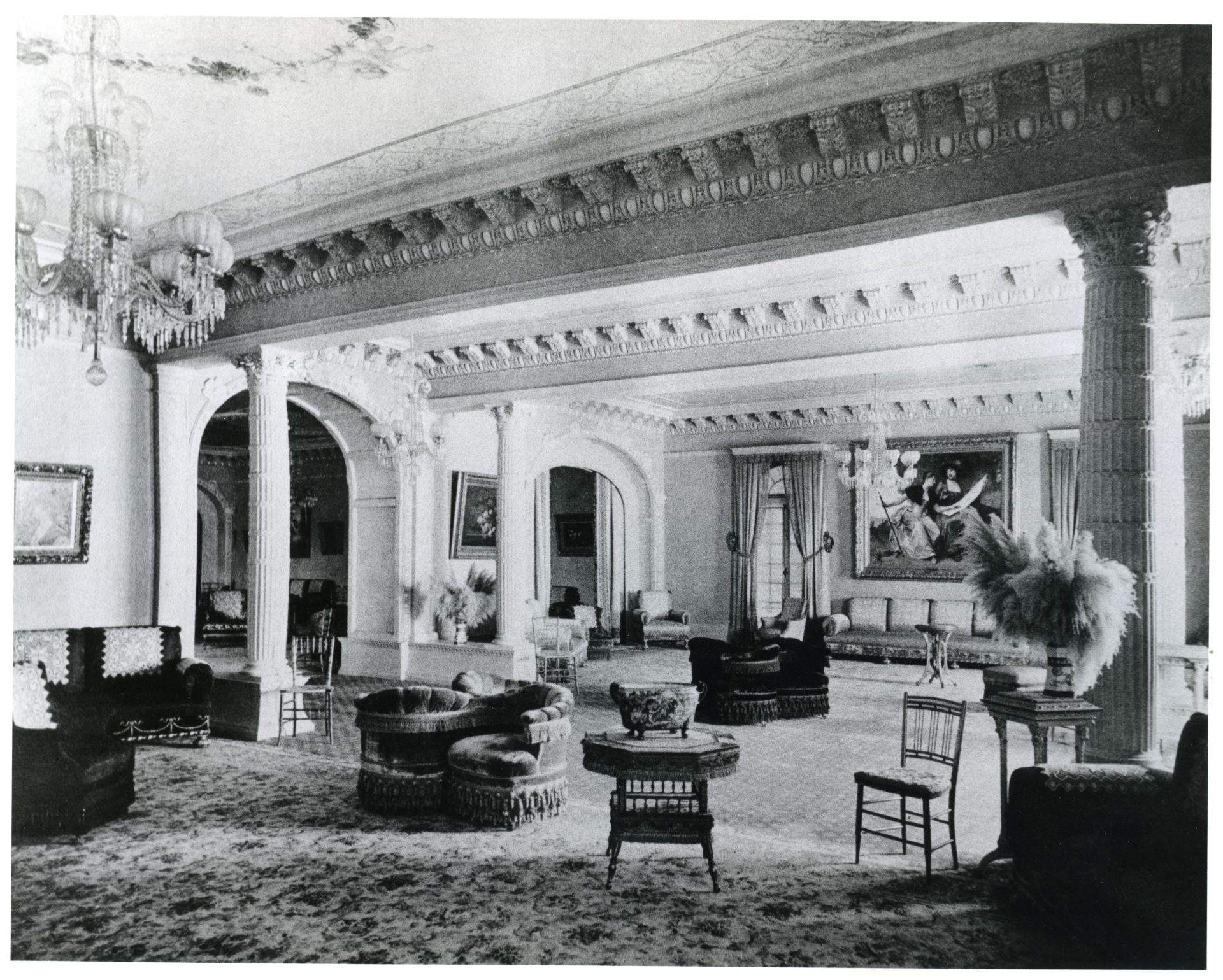
Interior of parlor at Hotel Ponce De Leon with a tête-à-tête that has a “chaperone feature”.
Written by, Shelby Fox, Research Library Assistant
Sources:
Attributed to John Henry Belter American, and or attributed to J. H. Belter & Co. “Attributed to John Henry Belter: Tête-à-Tête: American.” The Metropolitan Museum of Art. Accessed January 4, 2025. https://www.metmuseum.org/art/collection/search/8489.
Attributed to Pottier and Stymus Manufacturing Company. “Attributed to Pottier and Stymus Manufacturing Company: Armchair: American.” The Metropolitan Museum of Art. Accessed January 4, 2025. https://www.metmuseum.org/art/collection/search/237.
Company, Pottier and Stymus Manufacturing. “Pottier and Stymus Manufacturing Company: Armchair: American.” The Metropolitan Museum of Art. Accessed January 4, 2025. https://www.metmuseum.org/art/collection/search/236.
Florida, the American Riviera: St. Augustine, the winter newport ; the Ponce de Leon, the Alcazar ; the casa monica. New York: Gilliss Bros. & Turnure, 1887.
Graham, Thomas. Flagler’s Grand Hotel Alcazar. Saint Augustine: St. Augustine Historical Society, 1989.
Graham, Thomas. Mr. Flagler’s St. Augustine. Gainesville: University Press of Florida, 2022.
“Made in New York: Pottier and Stymus Manufacturing Company.” The Epoch Times. Accessed January 4, 2025. https://www.theepochtimes.com/bright/made-in-new-york-pottier-and-stymus-manufacturing-company-5652277?welcomeuser=1.
“The Courting Chair.” The Journal of Antiques and Collectibles, May 15, 2022. https://journalofantiques.com/columns/great-collections/the-courting-chair/.